
Glaucoma and Retinal Ganglion Cell Loss
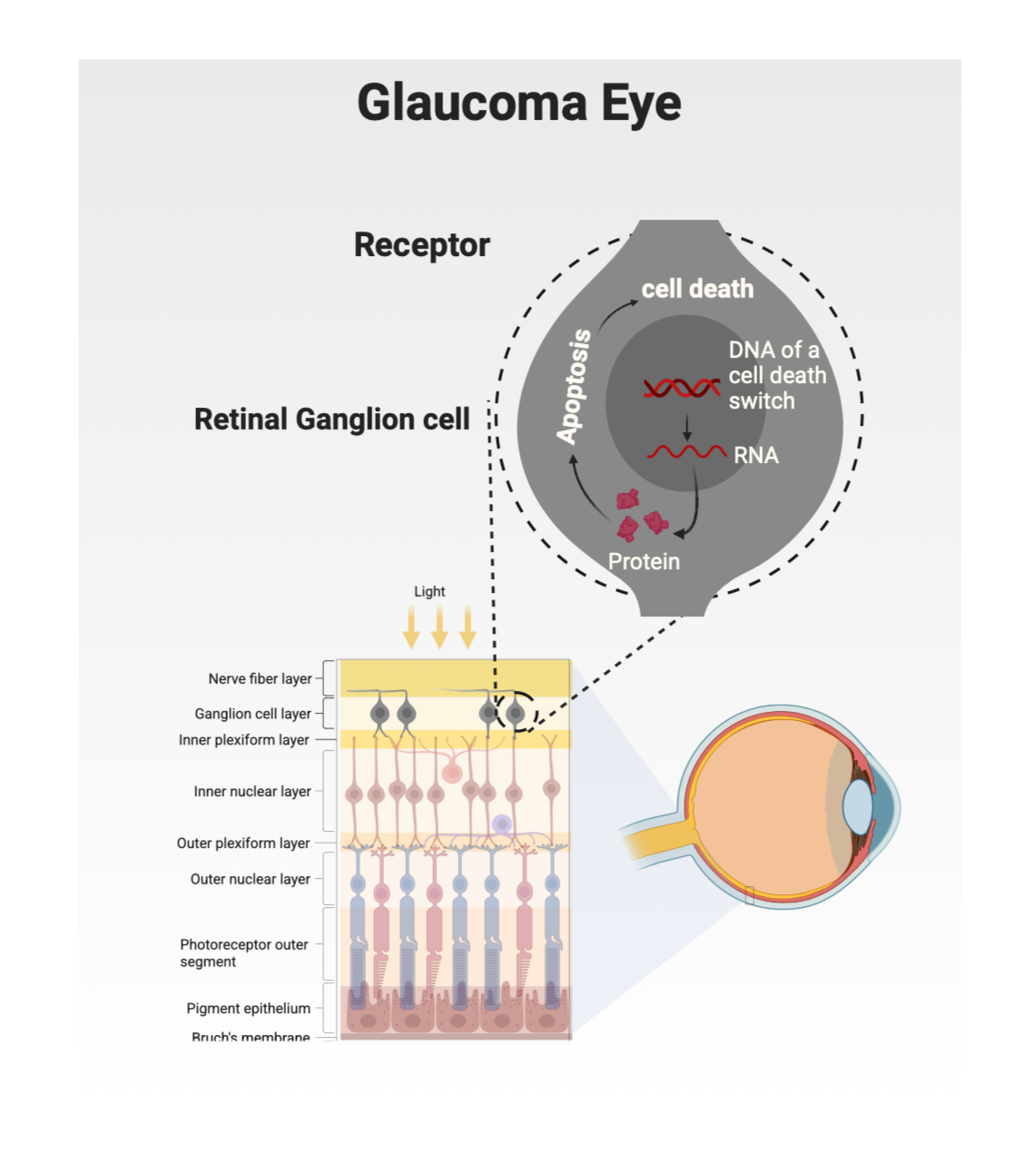
Glaucoma is characterized by elevated intraocular pressure or other stressors that trigger the progressive degeneration of retinal ganglion cells (RGCs) – the nerve cells that carry visual signals from the eye to the brain.
As these cells deteriorate, communication between the retina and brain breaks down, leading to gradual and irreversible vision loss if untreated.
Protecting or regenerating RGCs is key to preventing vision loss or restoring vision in glaucoma patients.

Key Benefits of CRISPR Gene Therapy:
A Precision Approach for Lasting Glaucoma Treatment
🔬 Targets the Root Cause
Edits or silences disease-driving genes, addressing glaucoma at its genetic source.
⏳ Long-Lasting Protection
Provides durable genetic correction, reducing the need for ongoing treatments.
🎯 Precision and Safety
Delivers highly targeted gene editing with minimal off-target effects.
💡 Hope Beyond Limits
Remains effective even when traditional medications or surgery lose efficacy.
Gene Therapy: How CRISPR-Cas Therapy Can Treat Glaucoma
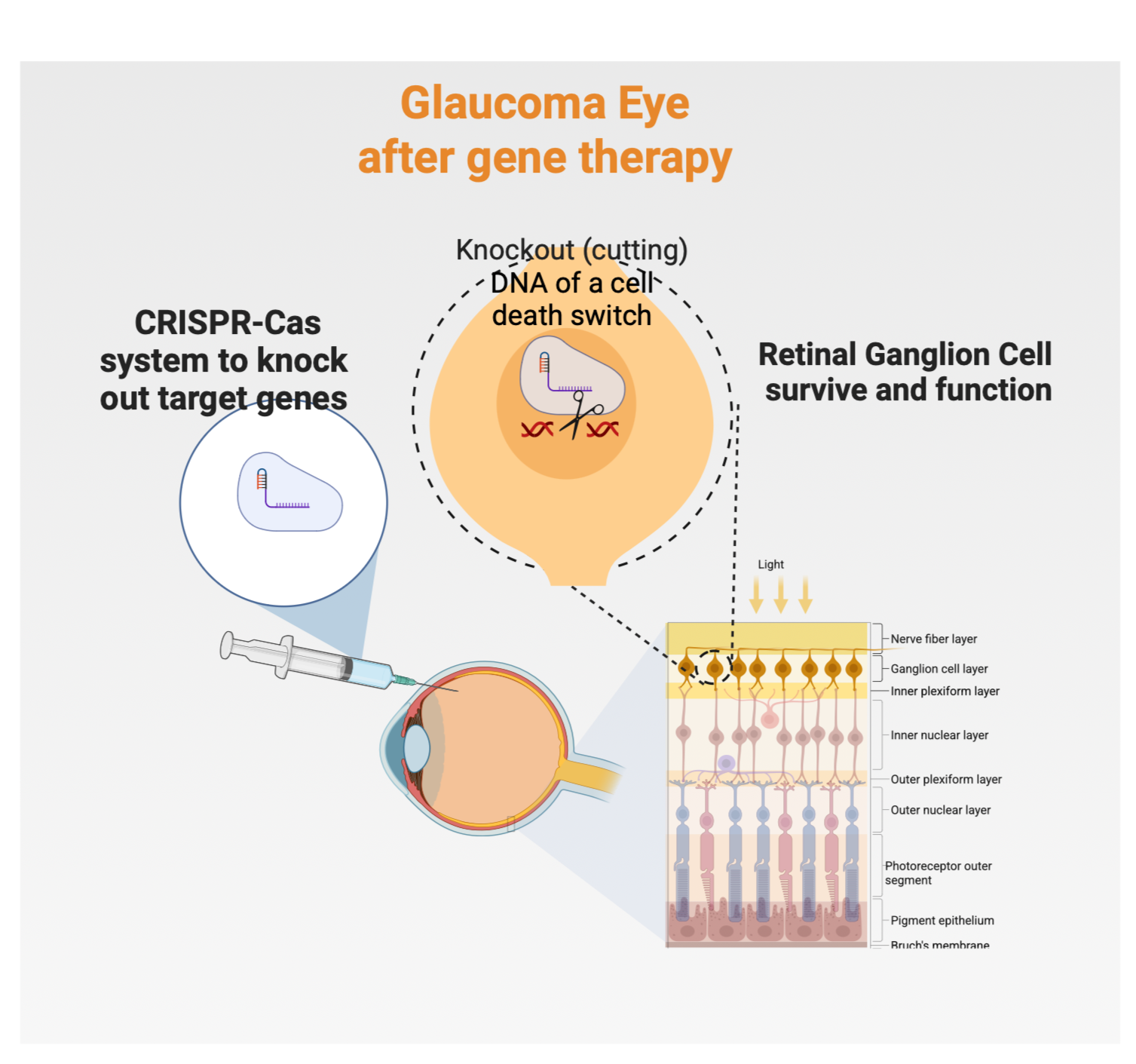
CRISPR-Cas therapy treats glaucoma by precisely modifying genes involved in retinal cell health and intraocular pressure regulations.
Using the Cas enzymes as a molecular “scissors”, specific disease-related genes can be knocked out or silenced, reducing harmful stress on RGCs.
Alternatively, CRISPR systems can be engineered to activate or introduce genes that promote survival of RGCs.
This targeted, programmable approach addresses glaucoma at the molecular level – offering durable, next-generation vision protection.